‘GLITCH’ DATA & CODE MASH-UP – “ENTER THE MATRIX” – CARRY ON COMPUTING
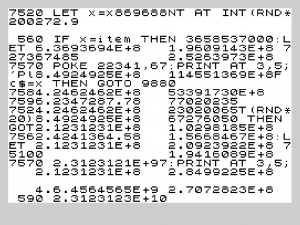
Early Glitch Art. Animated layers of BASIC code and random computer glitch, with loud nasty beeps. Micro computer internal effects such as List, Run, Load and other more direct commands, overlaid. This creates a collage effect of the ‘insides’ of the computer. Generated on the fly by the program.
History: As with ‘Minimal’, the aim of computer art and graphics in those far-off days was to improve the image rendering, dimensions, realism (so-called), in a mad race to Toy Story. That was not my aim with Micro Arts.
VIDEO with sound off
Coming soon
STILLS

Micro Arts Group Geoff Davis MA2 Various Unusual Events Carry On Computing computer art
This collage technique is now quite common, but had not been used in computer art at the time (Digital TV Dinner was video art using a games console as source). 1970s computer art was mathematically regular, lines drawn by plotters, or graphics, designer, patterns. These styles were highlighted in MA “Abstract Originals”. This is also the preferred “pioneering” style now, see Hans Dehlinger’s cubes, Herbert Franke’s symmetric animations etc.
“Carry On films” are an English film franchise, 31 farcical satirical comedies, 4 Christmas specials, and TV series.
For a history of glitch video and net art see Alex Pieschel review.
For a modern example see Stanza – Entangled Cities art.
Recently there have been videos of RAM Scan 64 (Commodore 64) which was unintentional errors providing entertainment to the 8-bit community, with added retro music.